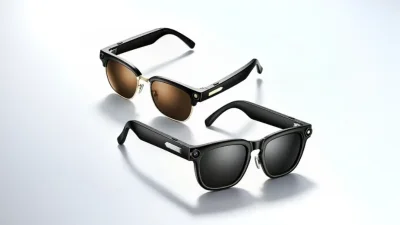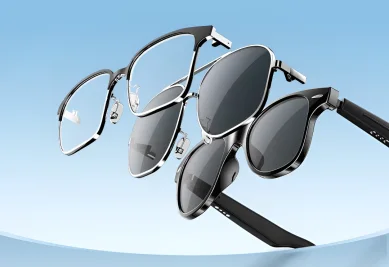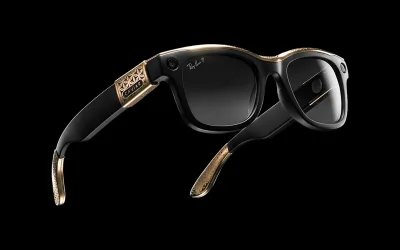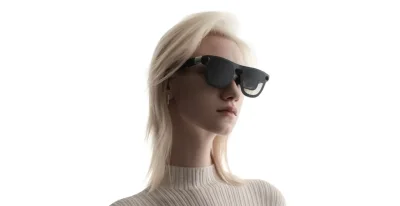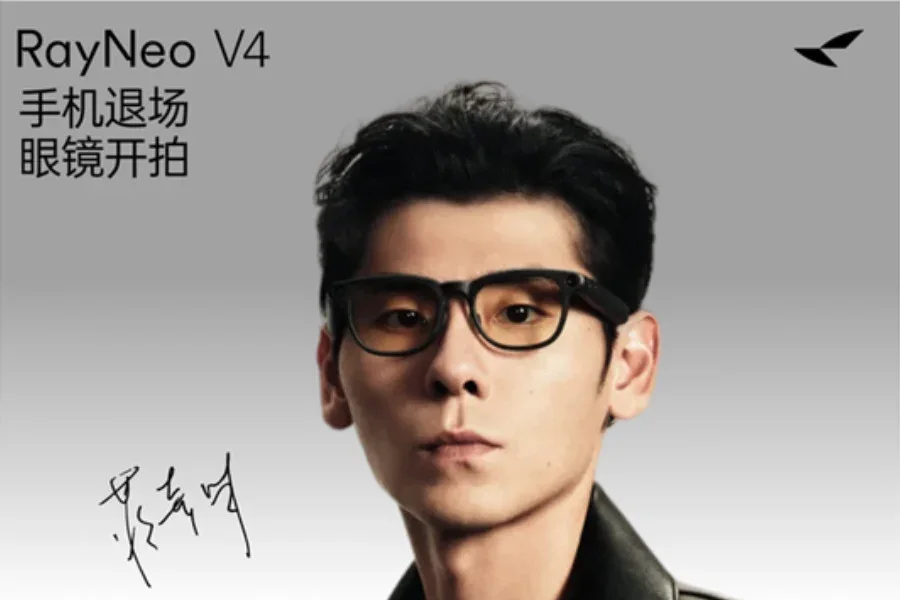
RayNeo has launched the V4, the successor to its V3 AI photography glasses, with a clear focus on improving core performance rather than adding new features.
The company believes that faster response times and longer battery life are what the AI glasses market truly needs.
>>> RayNeo GT Max: First AR Glasses with Dolby Vision Launch
According to RayNeo, the AI glasses industry introduced over 200 new features in the past year, but long-term user adoption of those features remains below 6%.
In response, the V4 concentrates on refining existing capabilities.
Speed and Performance Upgrades
The V4 employs a dual-chip architecture, combining Qualcomm's Snapdragon AR1 with a Hengxuan BES2800 low-power chip.
By migrating AI tasks to an RTOS-based low-power system, the glasses can wake directly into the AI engine without the overhead of a full Android platform.
RayNeo claims a 0.2-second wake time and a 2.1-second voice response, a 138% improvement over the V3.
Image recognition takes approximately 3.7 seconds. A 4-microphone array and bone conduction microphone enhance voice pickup, especially in quiet environments.
Battery and Charging
The V4 features a "Blue Whale semi-solid battery" with a high-silicon anode and steel shell packaging, offering a 57% increase in capacity over the V3.
>>> Anker Launches 10,000mAh 30W Magnetic Power Bank with Fire-Resistant Battery
This translates to about 47 minutes of continuous video recording, 11.5 hours of music playback, or roughly 949 photos before reaching 10% battery.
The charging case provides seven additional full charges, and fast charging reaches 80% in 25 minutes.
Imaging System Overhaul
RayNeo co-developed a custom OG09B square sensor with OmniVision Technologies.
The 1:1 aspect ratio sensor measures 1/2.9 inches, about 50% larger than the IMX681 found in competing glasses.
The square format reduces cropping when switching between horizontal and vertical shooting.
The individual pixel size is 2.09 micrometers for improved low-light performance.
The system supports an F2.2 aperture, 17mm ultra-wide lens, 2.5K video, and dynamic image stabilization.
>>> Red Magic 11S Pro goes global with Snapdragon 8 Elite Gen 5 Leading Version and 7,500mAh battery
RayNeo partnered with ArcSoft to optimize image algorithms across over 150 scenarios.
A new feature called Awesome Mode captures a photo or 15-second clip without manual triggering, arriving via OTA update in June.
Design and Durability
The V4 is the first RayNeo AI glasses with an IP67 rating.
It weighs 38 grams and features titanium hinges, a multi-layer sandblasted finish, and an air nose pad.
Available colors include Midnight Black, Fog Gray, and Wilderness Green, plus a sunglasses version with transparent and gradient lens technology.
Pricing and Availability
The RayNeo V4 starts at 2,199 yuan (around $325) in China.
The sunglasses version is 2,399 yuan (around $353), and the all-in-one set with charging case and accessories is 2,799 yuan (around $412).
>>> Xiaomi 17T Series Global Launch: How to Watch the Event Live
The charging case is 299 yuan separately, or 199 yuan when bought with the glasses. First deliveries begin on May 30.