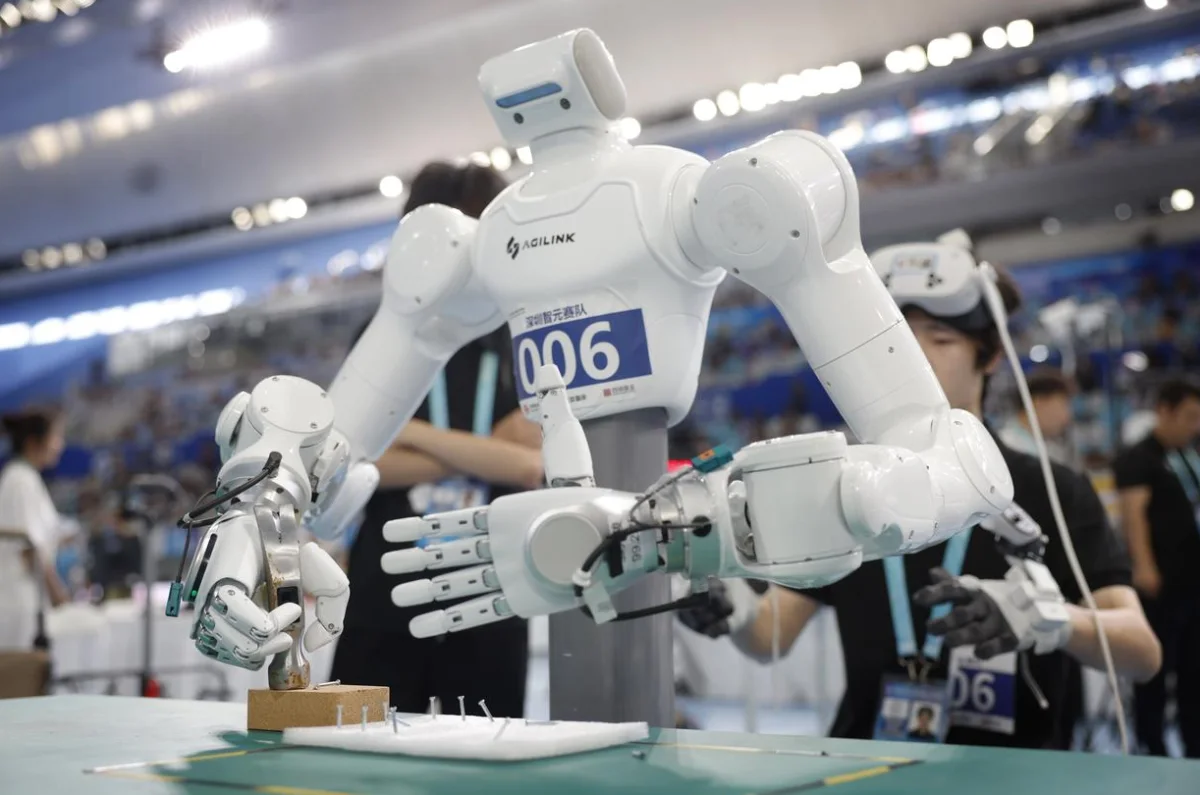
AGIBOT made a strong debut at the 2nd World Humanoid Robot Games in Beijing on August 26, 2026, winning a total of 46 medals.
The company secured 18 gold, 16 silver, and 12 bronze medals, finishing first in both the gold medal table and the overall medal table.
The results highlight AGIBOT's growing focus on using humanoid robots for more than demonstrations.
Its robots competed in sports, dexterous manipulation, motion control, and practical tasks designed to test how well humanoid machines can operate in real-world environments.
Four Robots Take Part
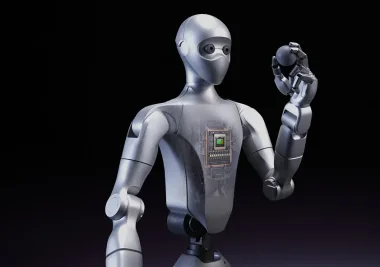
AGIBOT entered four robots in the Games: OmniHand, G2, A3, and X2.
According to the company, these machines were already in mass production or being used in real-world applications rather than being developed only for the competition.
OmniHand was one of the biggest performers for AGIBOT.
The robot reached the finals in all eight dexterous-hand events and won seven gold medals.
Its winning events included block building, powder weighing, and bean picking with tweezers, showing its ability to perform precise manipulation tasks.
X2 Shows Strong Motion Control
AGIBOT's X2 also delivered strong results in motion-control events.
It won gold in the 100-meter obstacle race and earned medals in the 400-meter obstacle race.
Importantly, X2 competed in its mass-produced configuration without hardware changes made specifically for the Games.
The robot uses AGIBOT's self-developed AGILE (AgiBot Generative Intelligent Locomotion Engine) framework.
The system combines environmental perception with movement decision-making and is designed to help the robot deal with irregular obstacles, uneven terrain, and changing environments.
AGILE also uses simulation-to-reality technology to transfer locomotion policies from simulations to physical robots.
Meanwhile, A3 won gold in the Tai Chi event, adding another medal to AGIBOT's motion-control results.
Robots Tested in Real-World Tasks
AGIBOT also won five gold medals in scenario-based events, including hotel services, library operations, and emergency response.
The G2 humanoid robot was used in these tasks.
The company says G2 has already been deployed at factories operated by companies including Longcheer and SAIC.
Its capabilities are supported by AGIBOT's ViLLA embodied foundation model GO, world model GE, and RW-RL system, which are designed to help robots perceive their surroundings, plan actions, and complete complex tasks.
AGIBOT's performance at the Games points to a broader goal: moving humanoid robots from impressive demonstrations toward reliable operation and large-scale deployment.
By combining mass-produced hardware with embodied AI and cross-scenario capabilities, the company is positioning its robots for increasingly practical roles beyond the competition floor.