Android 17 and Google’s promise of seven major OS updates add substantial long-term appeal.
Tensor emphasizes Google’s AI ecosystem, making the Pixel particularly interesting for software-driven features.
The Pixel 11 Pro packs a larger 4,850mAh battery and supports 30W wired charging, reaching 55% in 30 minutes.
It also offers 25W magnetic wireless charging, Qi2.2, reverse wired charging, and bypass charging.
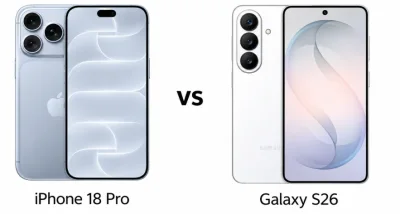
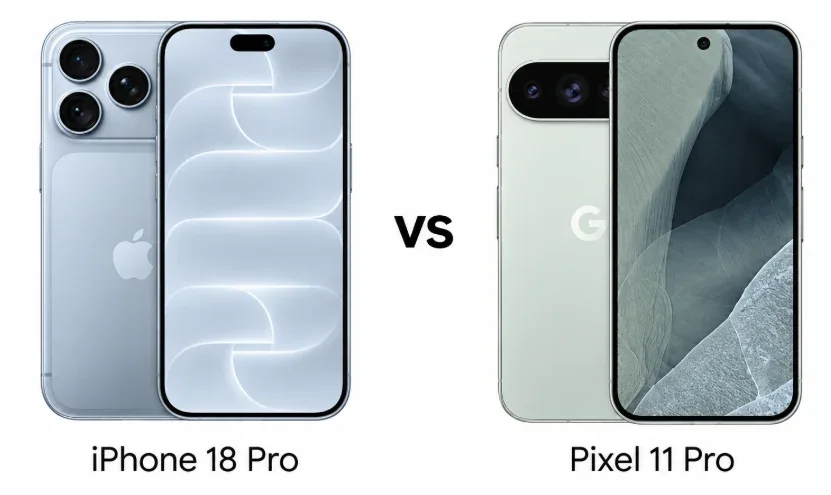
The iPhone 18 Pro uses a market-dependent 4,056mAh or 4,288mAh battery and supports wired charging to 50% in 15 minutes.
Its 25W MagSafe/Qi2 wireless charging is similarly competitive, while reverse wired charging adds another practical feature.
Apple’s smaller battery capacity does not necessarily indicate weaker real-world endurance.
The iPhone 18 Pro features a 48MP main camera, 48MP 4x periscope telephoto, and 48MP ultrawide, backed by sensor-shift stabilization and LiDAR.
Its video capabilities are especially extensive, including 4K recording at up to 120fps, Dolby Vision, ProRes RAW, and Apple Log 2.
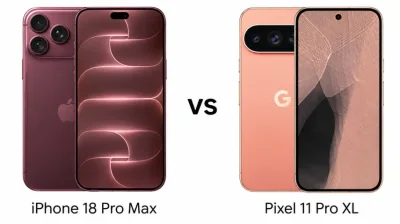
The Pixel 11 Pro combines a 50MP main sensor with a 48MP periscope telephoto offering 5x optical zoom and a 48MP ultrawide with a 123° field of view.
It also has a 42MP ultrawide selfie camera with PDAF, compared to the iPhone’s 18MP ultrawide selfie camera with PDAF.
For raw performance, Apple is the stronger choice; for battery capacity and charging versatility, Google stands out.
The iPhone 18 Pro starts around $1,200 / ₹164,900, while the Pixel 11 Pro starts around $1,100 / ₹120,000.
Apple offers a stronger overall performance and video package, while Google delivers better photography, battery, and value.
Specs are based on available data, and actual performance may vary.