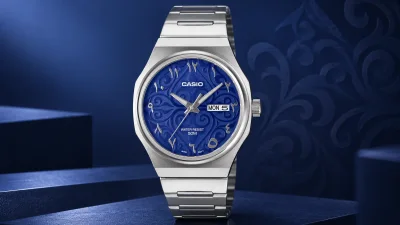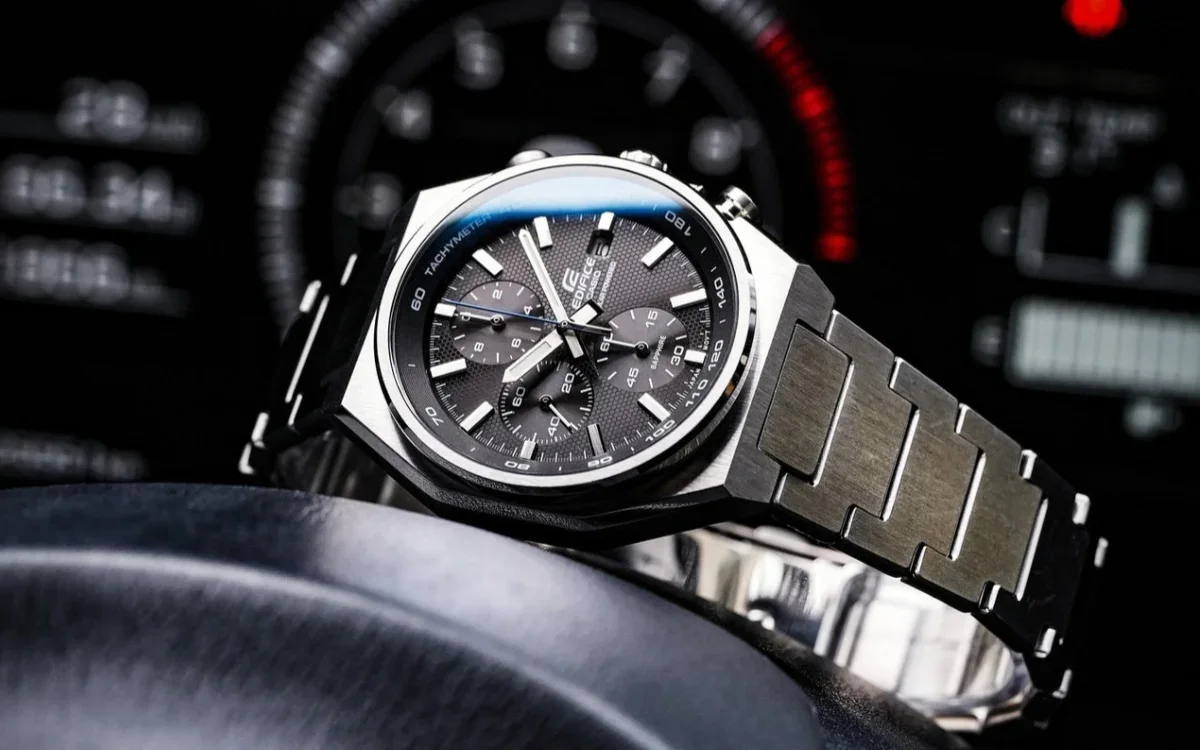
Casio has brought two Edifice EFS-S660 chronographs to the United States after their initial launch in Japan last August.
The EFS-S660D-1A and EFS-S660PB-1A are now listed on Casio's US website for $200 each.
Both are solar-powered analog chronographs that emphasize standard materials and a smaller case rather than smart features.
Compact Case and Sapphire Crystal
The EFS-S660 series stands out for its size, with a case measuring 38.3mm in diameter, 45.3mm lug-to-lug, and 11.6mm thick.
That footprint is smaller than many contemporary chronographs, which often exceed 40mm or even 42mm.
Casio has equipped both models with a sapphire crystal that includes an anti-reflective coating.
The material offers better scratch resistance than the mineral glass typically found at this price point.
Both watches also carry a standard 100-meter water resistance rating.
Two Finishes and Solar Movement
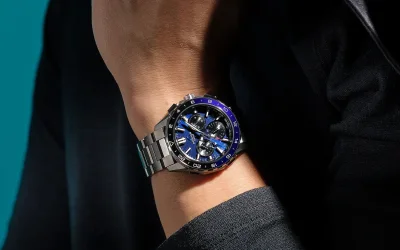
The EFS-S660D-1A is the heavier option at 129 grams, using a stainless steel case and a matching stainless steel bracelet with a one-touch, three-fold clasp.
It has a blue center seconds hand for contrast against the dark dial.
The EFS-S660PB-1A is lighter at 71 grams and swaps the steel band for a black resin strap.
It features a gray ion-plated case, a black ion-plated bezel, and a red center seconds hand.
Inside, both watches rely on Casio's solar charging system, with a textured dial that lets ambient light reach the solar panel underneath.
A full charge can keep them running for around five months before the hands stop moving.
A low battery alert notifies users when the watch needs more light exposure.
The quartz movement is rated for an accuracy of plus or minus 20 seconds per month.
For timing, the watches offer a 1/20-second stopwatch that can measure elapsed time, split times, and first- and second-place finishes for up to nearly an hour.
The dial includes three standard hands, a date window, and three sub-dials for regular seconds, stopwatch minutes, and 1/20-second measurements.
Casio has also added a tachymeter scale around the outer bezel for calculating speed based on travel time.