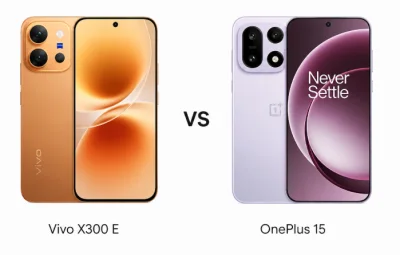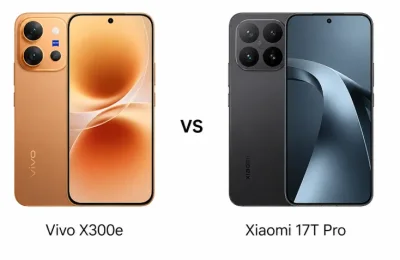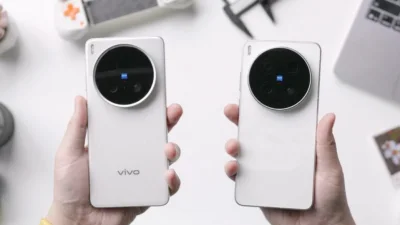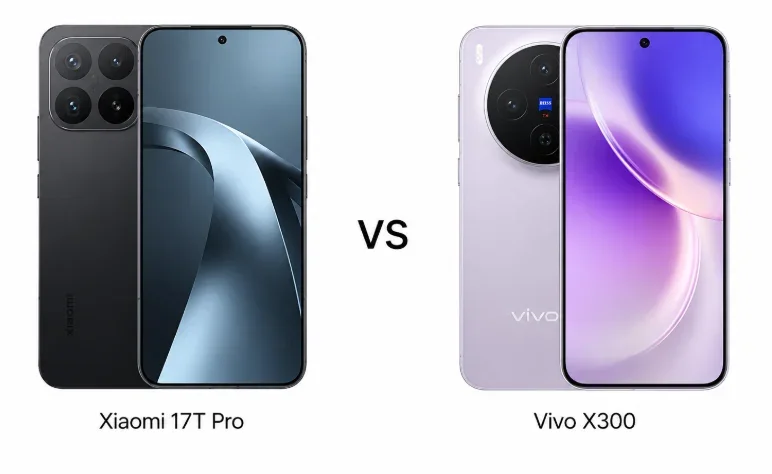
The Xiaomi 17T Pro and Vivo X300 both target premium flagship buyers at around $900. While they share the same price, each phone emphasizes different strengths.
Xiaomi focuses on battery life, multimedia, and long-range zoom, while Vivo highlights compact design, camera refinement, and software support.
Design and Display
The Xiaomi 17T Pro uses Gorilla Glass 7i with an aluminum frame and IP68 rating. It supports dual physical SIMs and eSIM.
The Vivo X300 also features glass and aluminum but adds IP69 protection for high-pressure water resistance. Its ultrasonic fingerprint sensor is faster than Xiaomi's optical solution.
Xiaomi offers a 6.83-inch AMOLED display with 144Hz refresh rate, Dolby Vision, HDR10+, 3840Hz PWM dimming, and 3,500 nits peak brightness.
Vivo counters with a 6.31-inch LTPO AMOLED display supporting adaptive 120Hz, Ultra HDR, HDR10+, HDR Vivid, and 4,500 nits peak brightness.
Xiaomi's higher refresh rate provides smoother animations, while Vivo's LTPO improves power efficiency.
Performance and Battery
Both phones are powered by the 3nm MediaTek Dimensity 9500 chipset with UFS 4.1 storage. They offer up to 16GB RAM and 1TB storage.
Graphics differ slightly: Xiaomi uses Mali-G1 Ultra MC12, Vivo uses Arm G1-Ultra, but real-world performance is nearly identical.
Battery life is a key differentiator.
The Xiaomi 17T Pro packs a massive 7,000mAh silicon-carbon battery with 100W wired, 50W wireless, and 22.5W reverse wired charging.
The Vivo X300 has a 6,040mAh battery with 90W wired and 40W wireless charging. Xiaomi clearly wins for endurance and charging speed.
Camera System
Xiaomi features a Leica-tuned triple camera: 50MP main, 50MP periscope telephoto with 5x optical zoom, and 12MP ultrawide.
It supports 8K video, HDR10+, Log, and 10-bit Rec. 2020.
Vivo counters with a 200MP main sensor, 50MP 3x periscope telephoto, and 50MP autofocus ultrawide, enhanced by Zeiss optics, T* coating, Laser AF, and 3D LUT import.
Vivo's setup is more versatile overall, but Xiaomi offers superior long-range zoom and professional video features.
For selfies, Xiaomi has a 32MP camera with 4K HDR10+ recording.
Vivo steps ahead with a 50MP autofocus camera that records 4K at 60fps, delivering sharper portraits and better group shots.
Pricing and Value
Both phones are priced around $900 (Xiaomi at ₹75,000, Vivo at ₹76,000). Xiaomi offers better hardware value with its larger battery, faster charging, and immersive display.
Vivo provides a more polished experience with superior cameras, compact design, IP69 durability, ultrasonic fingerprint, USB 3.2, and five major Android upgrades.
Choose the Xiaomi 17T Pro if battery life, charging speed, multimedia, and 5x zoom are priorities.
Choose the Vivo X300 if camera versatility, compact ergonomics, software longevity, and everyday refinement matter more.