This gives OnePlus a major advantage for heavy users, gamers, and frequent travelers.
The Pixel's wireless ecosystem is attractive, but OnePlus is far more practical for endurance and charging speed.
For cameras, the Pixel 11 uses a 48MP main sensor with OIS, a 10.8MP 5x optical telephoto, and a 13MP ultrawide with PDAF.
Google also brings features like Best Take, Ultra HDR, Pixel Shift, and advanced autofocus.
The OnePlus 15 counters with three 50MP cameras, including a 3.5x periscope telephoto and a 116-degree ultrawide.
It supports 8K recording, 4K at 120fps, Dolby Vision, and LUT functionality.
The Pixel's computational photography remains a key strength, while OnePlus offers higher-resolution sensors and more advanced video options.
The Pixel wins for longer native optical zoom, but OnePlus leads in ultrawide resolution and video capabilities.
Software support also differs.
The Pixel 11 ships with Android 17 and promises 7 major OS updates, while the OnePlus 15 runs Android 16 with OxygenOS 16.
Pixel offers longer promised major Android support.
Connectivity-wise, the OnePlus 15 includes Wi-Fi 7, while the Pixel 11 has Wi-Fi 6E. Both feature Bluetooth 6.0 and USB 3.2.
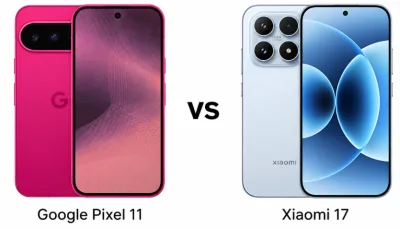
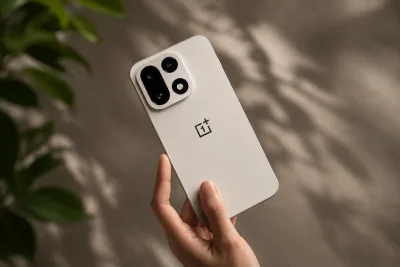
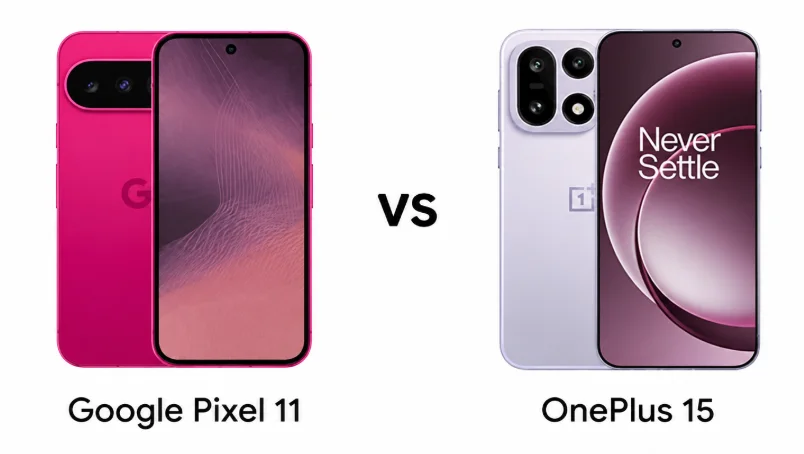
Ultimately, the OnePlus 15 delivers more hardware for a similar price, with a larger battery, faster charging, and a more powerful chip.
The Pixel 11 remains compelling for those who value compact design, longer software support, and Google's computational photography.