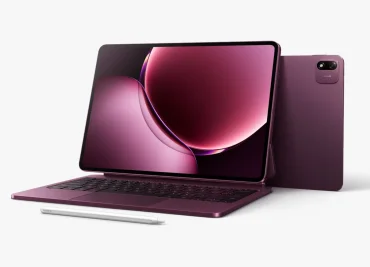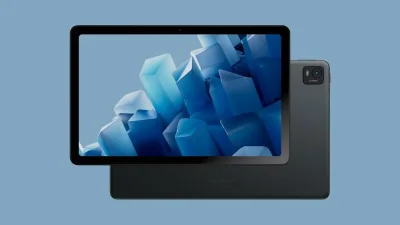
Asus is making a comeback in the mainstream tablet market with the launch of the new Asus Pad.
The announcement comes just months after the company officially exited the smartphone market.
The Asus Pad features a 12.2-inch dual-layer OLED display with a 2.8K resolution (2800 x 1840) and a 144Hz refresh rate.
Asus says the tandem OLED technology uses two emission layers to improve brightness, power efficiency, and panel lifespan compared to traditional OLED screens.
The display covers 100% of the DCI-P3 color gamut and reaches up to 600 nits of typical brightness.
Performance and battery
Under the hood, the tablet is powered by MediaTek's Dimensity 8300 chipset built on a 4nm process.
It comes with 8GB of LPDDR5X RAM and up to 256GB of UFS 3.1 storage, expandable via microSD up to 1TB.
The device packs a 9,000mAh battery with support for 45W USB-C fast charging. Asus claims the battery can reach 50% charge in about 30 minutes.
For audio, the Asus Pad includes a quad-speaker system with Dolby Atmos support, designed to deliver an immersive experience for videos, games, and music.
Software and features
The Asus Pad runs on Android 16 and includes several AI-powered features.
Circle to Search with Google allows users to search directly from on-screen content, while Google Gemini integration provides AI assistance.
Asus GlideX support enables screen sharing, file transfers, and cross-device workflows.
The tablet supports the Asus Pen 2.0 for note-taking and drawing, as well as Bluetooth keyboard connectivity.
Additional features include Wi-Fi 6E, Bluetooth 5.3, Face Login, a 13MP rear camera, and a 5MP front-facing camera.
Despite its large display, the Asus Pad remains portable with a 6.5mm-thin profile and a weight of 523 grams.
The device uses a magnesium chassis paired with a fiberglass back cover.