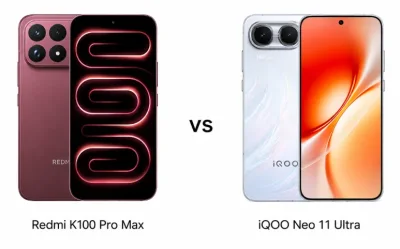
The front camera also differs: Redmi’s 32MP selfie camera supports 4K video, while iQOO’s 16MP front camera is limited to 1080p at 30fps.
>>> Best Mid-Range Phones 2026: Top 5 Picks Amid Chip Shortage
Redmi is better for detailed selfies and video calls.
Verdict: Redmi is the clear winner thanks to its 200MP main camera, dedicated 5x periscope telephoto, stronger ultrawide, and higher-resolution 4K selfie camera.
iQOO’s camera system is notably less versatile.
Pricing and Value
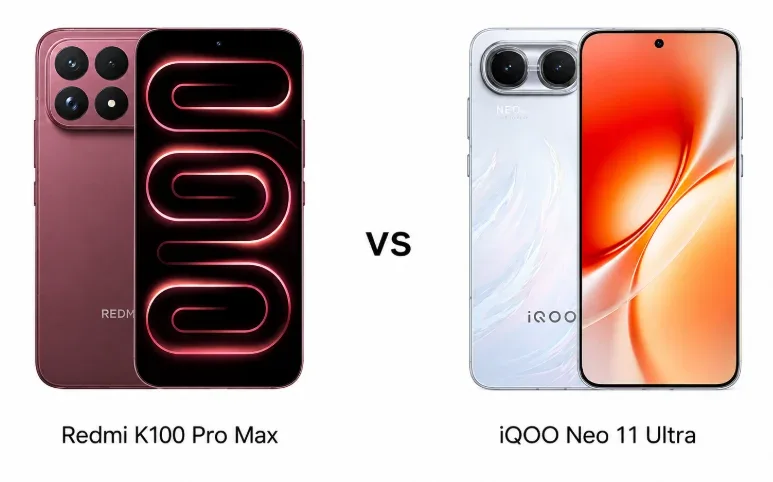
The Redmi K100 Pro Max is priced around $700 or ₹63,000, while the iQOO Neo 11 Ultra is around $500 or ₹50,000.
This creates a sizeable price gap, with iQOO positioned as the more aggressive value-focused flagship.
At around ₹50,000, the iQOO Neo 11 Ultra offers excellent value, particularly for users prioritizing flagship-level performance, a high-resolution display, and a large battery.
Redmi demands considerably more, but the additional cost brings a much more capable camera system, wireless charging, better audio, and broader connectivity.
Verdict: iQOO wins on pure value because its lower price delivers flagship performance and excellent battery life.
>>> Xiaomi Xring O3 SoC Hits 5.22M AnTuTu, 18 Fold Preorders Open
Redmi is worth the premium for buyers who want stronger cameras and a more complete feature set.