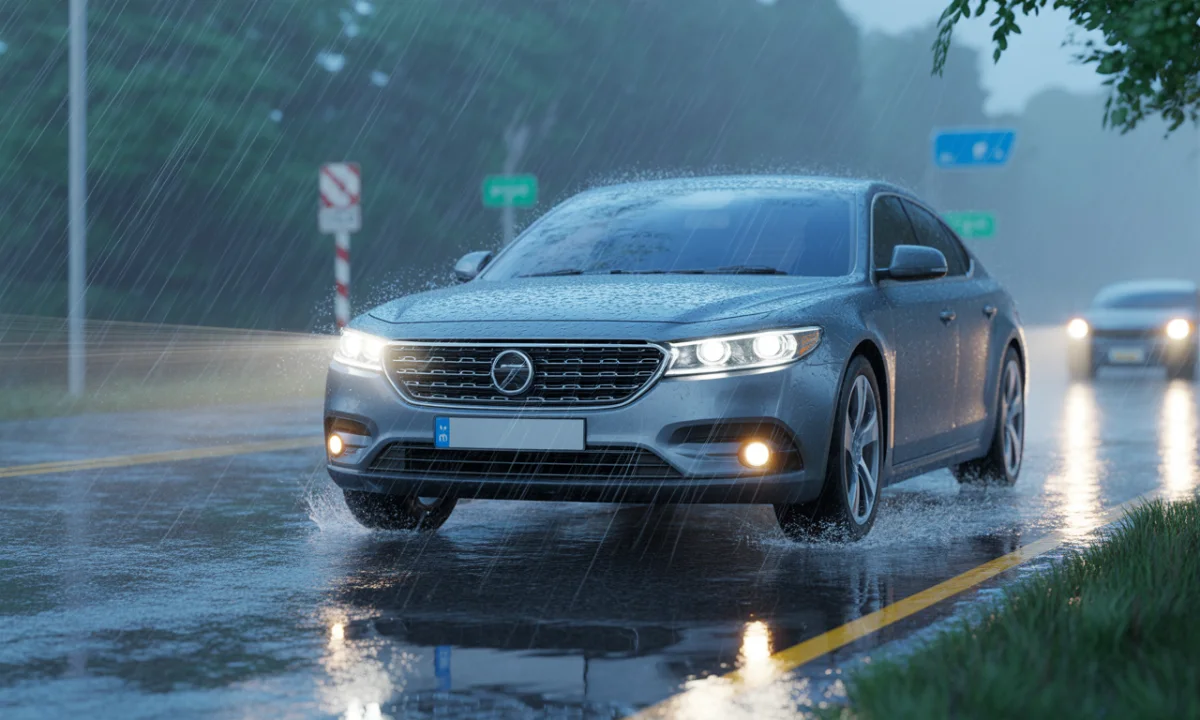
Signal early and use defrosters and wipers to keep windows clear. If visibility drops dangerously, pull well off the road and turn on hazard lights.
In heavy rain, disable cruise control to maintain manual control. Never drive through flooded areas—depth and current can be deceptive and deadly.
Managing High Winds and Dust Storms
High winds can push vehicles off course, especially high-profile ones like RVs and trucks. Keep both hands on the wheel and expect sudden lateral movement.
Reduce speed and leave extra space around other vehicles.
Avoid towing or carrying rooftop cargo in windy conditions, as it acts like a sail.
If a dust storm hits, pull well off the road, stop downwind of traffic, and stay inside with lights and hazard flashers on.
Preparing Your Vehicle and Emergency Kit
Vehicle readiness is essential. Check tires, brakes, fluids, battery, and lights regularly.
Replace worn wipers and use freeze-resistant washer fluid. Ensure no open recalls on your vehicle.
Carry an emergency kit with blankets, an ice scraper, a shovel, traction mats, a flashlight, a first-aid kit, water, jumper cables, and basic tools.
Refresh the kit seasonally.
Defensive Driving and Technology
Defensive driving—anticipating hazards, managing speed, and preserving space—is key. Advanced driver-assistance systems can help, but don't over-rely on them.
Stay engaged and aware.
Infrastructure improvements like better signage and barriers also reduce risks. Support and heed these measures.
In summary, safe driving in bad weather requires preparation, cautious behavior, and the willingness to delay or stop when conditions are severe.
By following these guidelines, you can significantly reduce your risk of a weather-related crash.