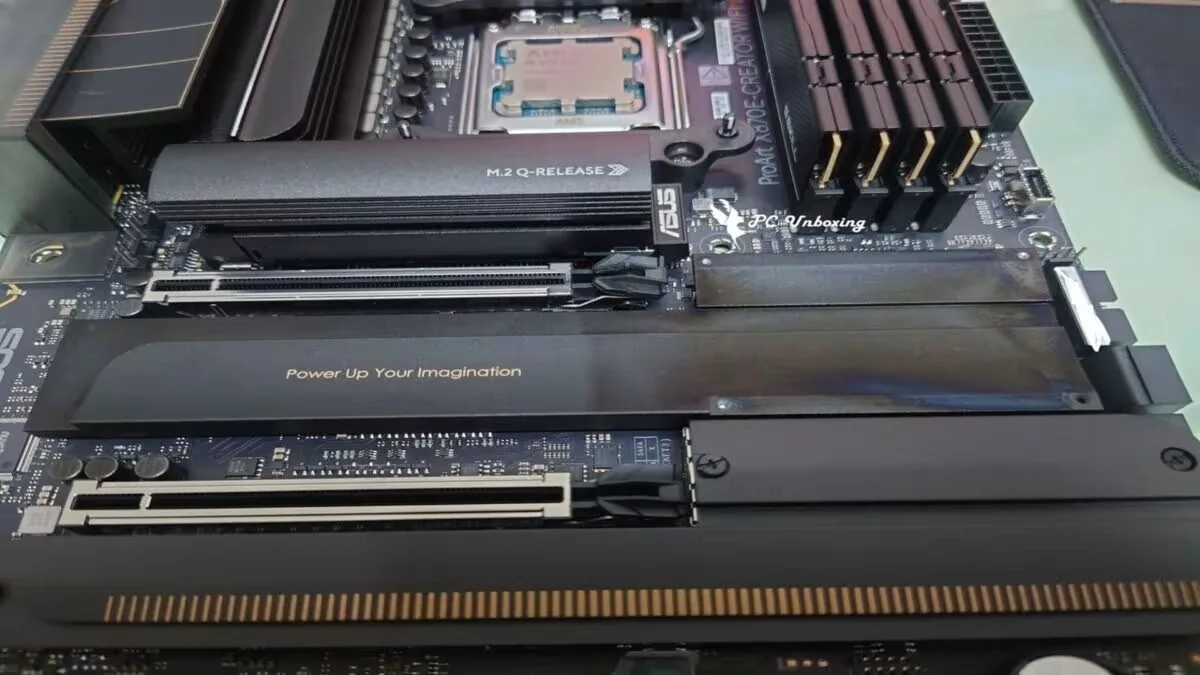
A recent report reveals that the intense heat from an ASUS ROG Astral GeForce RTX 5090 can discolor the chipset heatsink of a high-end motherboard after just six months of use.
The incident was shared by a user on a Taiwanese hardware forum.
They had been running an all-ASUS setup: the ROG Astral RTX 5090 paired with a ProArt X870E-Creator WiFi motherboard inside a ProArt PA602 case.
When the user removed the GPU after about half a year, they noticed clear marks on the PCH heatsink directly beneath where the card sits.
Some of the discoloration wiped off with a damp cloth, but not all of it.
This underscores the significant heat generated by the RTX 5090, which NVIDIA rates at 575W TDP.
Under heavy gaming, AI workloads, or large power transients, the card can draw even more power, and its triple-fan cooler pushes heat downward.
If case airflow is insufficient, that heat can bake nearby components over time.
While motherboard heatsinks are designed to tolerate high temperatures, the bigger concern is the chips beneath them.
Prolonged concentrated heat may shorten their lifespan and affect overall motherboard longevity.
The ROG Astral RTX 5090 has faced other issues since launch, including melting 16-pin power connectors, black screen problems, isolated capacitor fires, and early reports of missing raster units.
ASUS added better power monitoring on premium models, but such growing pains come with pushing next-gen hardware to its limits.
Users running a 5090, especially for long AI sessions, content creation, or heavy gaming, should monitor case temperatures and airflow closely.
Ensuring proper ventilation, securely seated cables, and checking for hot spots is advisable.
While this appears to be an isolated case, it serves as a reminder that ultra-high-power cards like the RTX 5090 run extremely hot and can affect surrounding hardware over time.