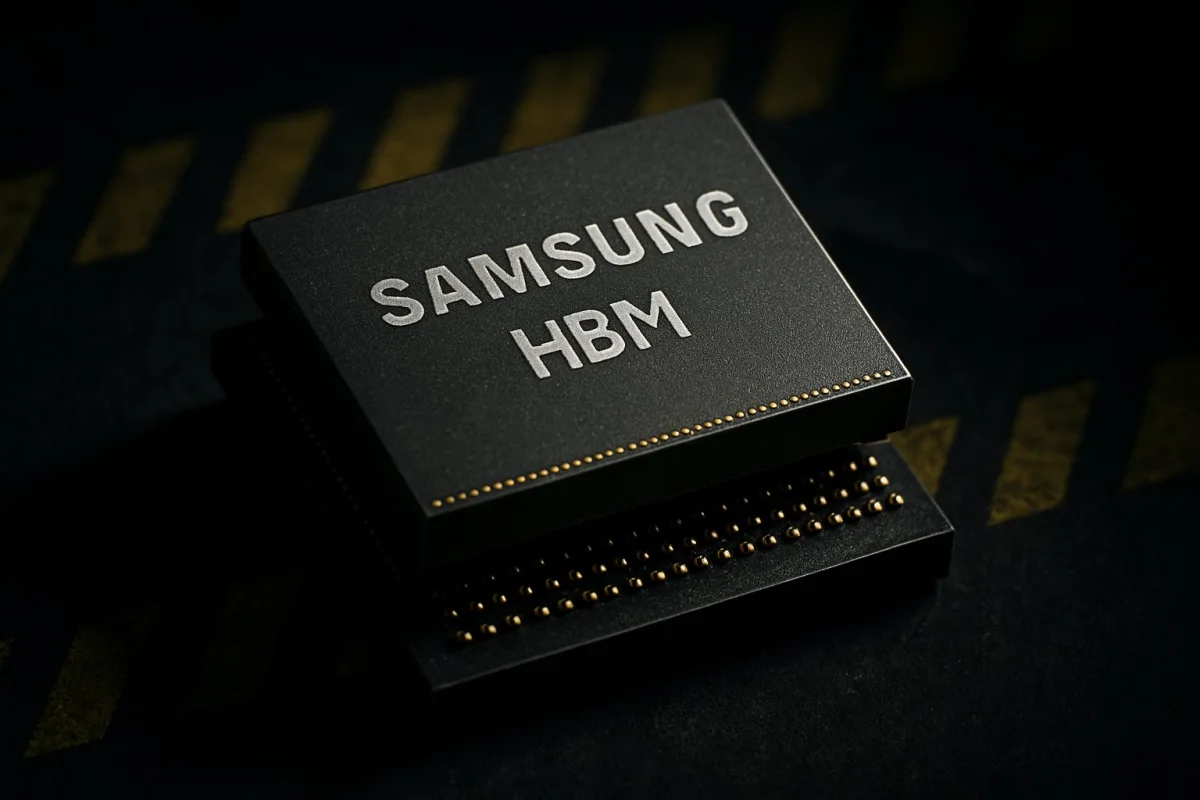
Netlist Inc. has filed new patent infringement lawsuits against Samsung Electronics, targeting the South Korean company's high-bandwidth memory (HBM) and DDR5 products that are essential for AI servers.
The complaints were submitted to the US International Trade Commission (ITC) and the US District Court for the Eastern District of Texas.
Netlist alleges that Samsung's advanced memory technology infringes on two of its patents.
One patent (No. 12,646,537) covers innovations in stacking memory chips using through-silicon vias (TSV), a technique that enhances performance in dense memory packages while reducing power issues.
The other (No. 12,650,937) relates to register clock driver (RCD) technology, which is critical for the smooth operation of DDR5 memory modules like RDIMMs and MRDIMMs at high speeds.
These components are in high demand for AI accelerators and high-end servers.
The ITC case also names several major companies that use Samsung's memory: Google, Nvidia, Supermicro, and Broadcom.
This includes products such as Google's TPUs, Nvidia's Blackwell and Rubin GPUs, and various Supermicro servers.
Netlist is seeking import bans and cease-and-desist orders, which, if granted, could block these products from the US market and disrupt AI hardware supply chains.
This is not the first legal battle between the two companies. Netlist, a California-based memory module and storage company, had a licensing agreement with Samsung in 2015.
The relationship soured around 2020, leading to ongoing litigation.
Samsung has already lost two jury verdicts in Texas: $303 million in 2023 and another $118 million in late 2024 for willful infringement of other Netlist memory patents.
Samsung's memory business has been a strong performer recently, driven by massive demand for HBM in AI training and inference.
Netlist's CEO, C. K.
Hong, framed the lawsuits as necessary to protect the company's innovations in the AI server memory space.
Samsung maintains that its products comply with the law and has stated it will defend itself vigorously.
The ITC typically moves faster than regular courts, so preliminary rulings with significant commercial impact could come in the coming months.