Every driver will eventually face mechanical trouble. Knowing how to troubleshoot common car problems is a practical necessity that saves time and money.
A blinking check engine light, a dead battery that only clicks, or a sudden flat tire are signals that, when read correctly, point to straightforward fixes or urgent repairs.
Warning lights and immediate actions
Dashboard warning lights are your vehicle's first communicators. A steady check engine light usually signals a fault that deserves prompt attention.
A blinking check engine light signals an active misfire and immediate risk to the catalytic converter.
If the light blinks, stop driving aggressively and get the car to a shop. Continuing to drive can turn a $200 repair into a $2,000 one.
The right first step is diagnostic information. Many auto parts stores read OBD-II trouble codes for free.
Basic Bluetooth OBD-II scanners cost under $30.
Treat lights as informative warnings rather than nuisances to prevent cascading failures.
Read codes promptly and pair that data with basic visual checks — fluid levels, loose gas cap, visible leaks — before accepting expensive labor recommendations.
Battery and charging system troubleshooting
A dead or weak battery is the most common roadside problem. Symptoms include a single click when turning the key, slow cranking, dim headlights, or flickering dash lights.
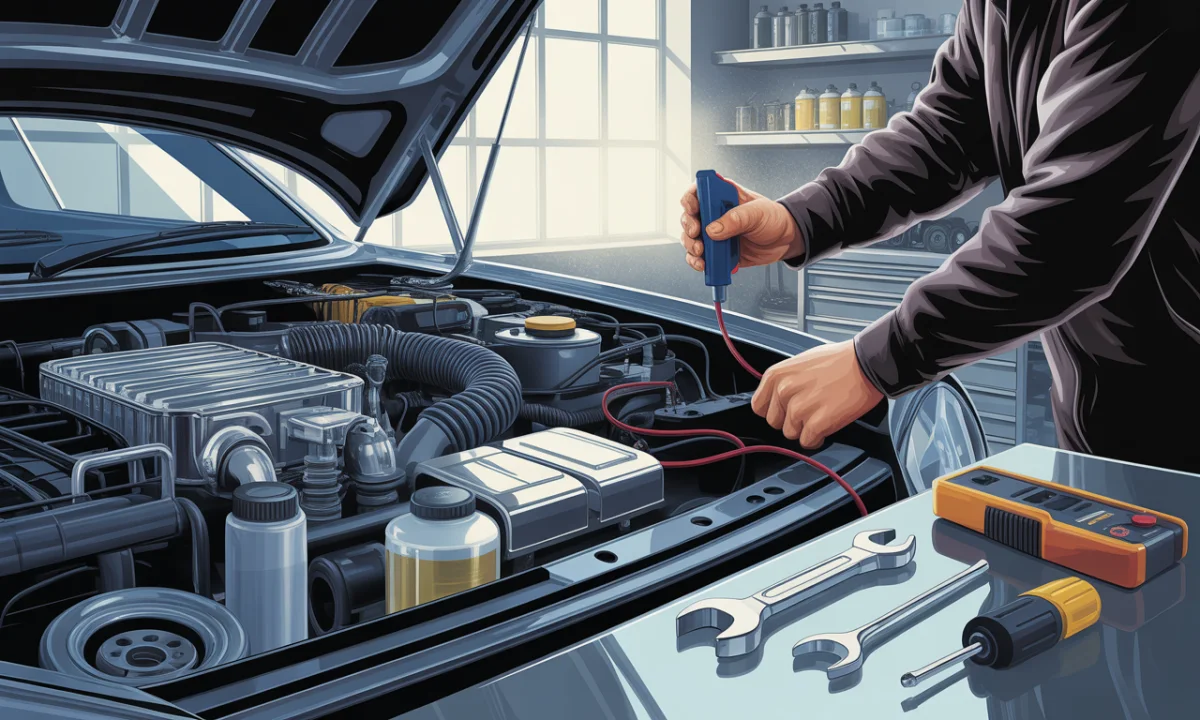
Use a multimeter: a healthy battery reads about 12.6 volts at rest.
With the engine running, the system should read between 13.7 and 14.7 volts if the alternator is charging properly.
If resting voltage is low and charging voltage remains under 13 volts, the alternator likely fails.
If resting voltage is low but charging voltage is in range after a jump, the battery may be past its useful life.
Jump-starting gets you mobile but is not a diagnosis. Follow a safe jump-start procedure and drive at least 30 minutes to recharge the battery.
Test battery health every six to twelve months. Replace batteries every three to five years depending on climate.
Many stores offer free testing and install a purchased battery at no charge.