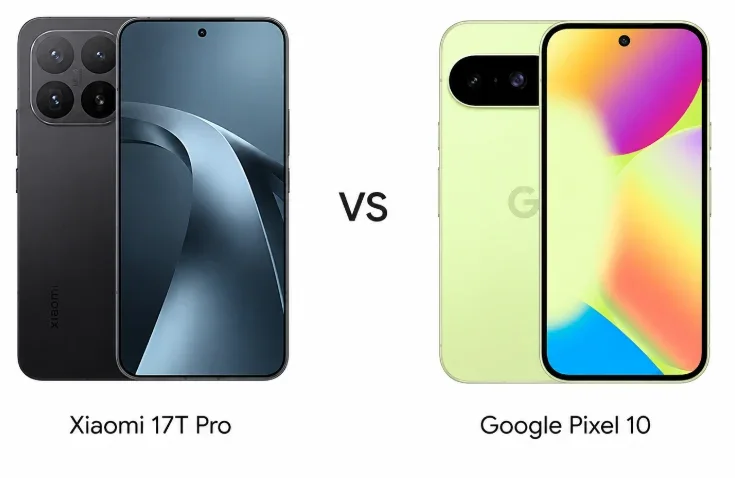
The battery should comfortably last a day, but charging speeds feel conservative compared to Xiaomi’s offering.
Camera System
The Xiaomi 17T Pro features a 50MP primary camera, a 50MP periscope telephoto camera with 5x optical zoom, and a 12MP ultrawide lens.
Leica tuning, Ultra HDR support, and advanced video capabilities, including 8K recording, give it a versatile camera system.
The Pixel 10 combines a 48MP main camera, a 10.8MP 5x telephoto lens, and a 13MP ultrawide camera.
While the hardware appears less impressive, Google’s image processing remains one of the strongest advantages of the Pixel lineup.
Xiaomi equips the device with a 32MP front camera capable of 4K recording and HDR10+ support.
Google’s 10.5MP ultrawide selfie camera benefits from autofocus and Google’s image processing, delivering reliable and natural-looking results.
Pricing and Value
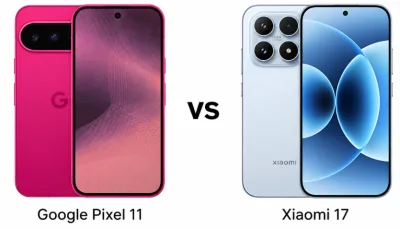
The Xiaomi 17T Pro is priced around ₹75,000 ($900), while the Google Pixel 10 is priced around ₹70,000 ($800).
The difference is relatively small considering the substantial hardware upgrades Xiaomi provides.
At its asking price, the Xiaomi 17T Pro delivers a flagship processor, significantly larger battery, faster charging, a higher-refresh-rate display, more storage options, and stronger camera hardware.
The Pixel 10, despite being priced around ₹70,000, justifies its cost through seven years of Android upgrades, Google’s AI ecosystem, camera software, and the clean Pixel experience.
Conclusion
The Xiaomi 17T Pro stands out with its 144Hz AMOLED display, massive 7000mAh battery, 100W charging, Leica-tuned camera system, 50W wireless charging, and flagship-grade Dimensity 9500 processor.
It is clearly designed for users who want cutting-edge hardware and minimal compromises.
The Google Pixel 10 differentiates itself with seven years of Android updates, advanced AI capabilities, Circle to Search, Satellite SOS, excellent computational photography, and a clean Android experience.
Xiaomi 17T Pro is the better choice for most buyers seeking maximum value in the premium segment.
Its display, battery, charging speeds, performance, and camera hardware provide a more complete flagship package.
The Google Pixel 10 remains an excellent option for users who prioritize software support, AI features, and Google’s photography experience, but Xiaomi offers a more compelling overall smartphone at this price point.