It recognizes dialects, wakes on voice, and runs on Seed's latest full-duplex voice model, so users can talk over the assistant mid-response instead of waiting for it to finish.
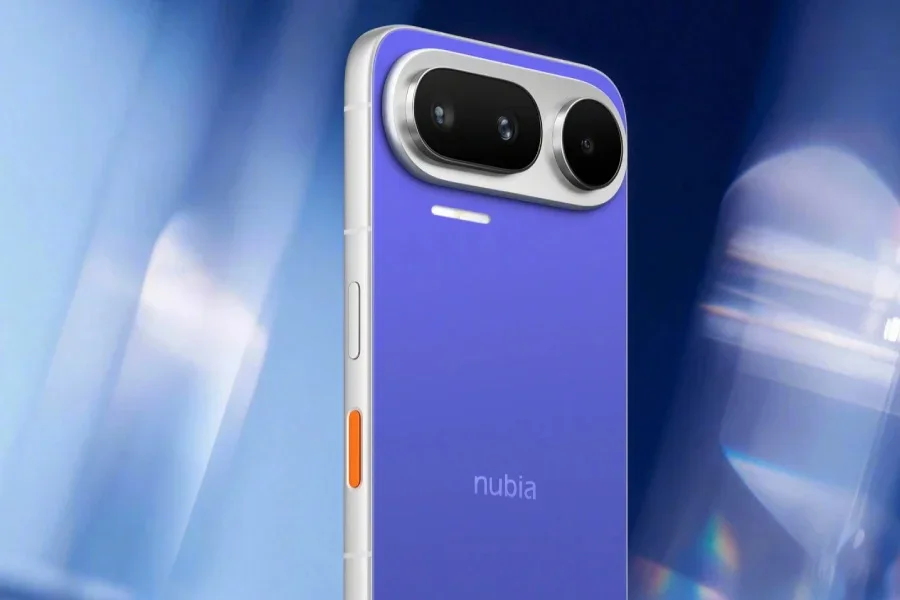
Nubia also moved the button's placement to make it easier to reach one-handed.
Nubia claims the phone has a 48% higher wake-up rate than competing phones in noisy places, such as crowded subway stations.
It also claims 21% better sentence recognition.
The assistant supports more than ten dialects, including Cantonese and Minnan.
The AI assistant can also understand images and what's happening on your screen.
Users can ask about something displayed on the phone, point the camera at an object for information, or use it during a video call to understand what the camera is showing.
The NaviX Ultra has a 6.78-inch LTPO 2.0 display with a 1-144Hz refresh rate.
It covers 100% of the DCI-P3 color range and reaches up to 4,500 nits of peak brightness.
The screen also supports DC dimming and 2160Hz PWM dimming.
Under the hood, it's powered by the Qualcomm Snapdragon 8 Elite Gen 5 chipset.
For cameras, the phone has a 200-megapixel main camera, a 50-megapixel ultra-wide camera, and a 64-megapixel periscope telephoto camera.
The phone uses Nubia's Galaxy Cooling System with a 7,100mm² vapor chamber for cooling.
Despite being just 7.62mm thick, it packs a large 7,100mAh battery.
Charging includes 90W wired and 50W wireless charging.
For those concerned with privacy, Nubia says the NaviX Ultra is the first device to complete registration for its intelligent agent large model with Chinese regulators.
The phone also includes lock-screen permission controls and international security certifications.