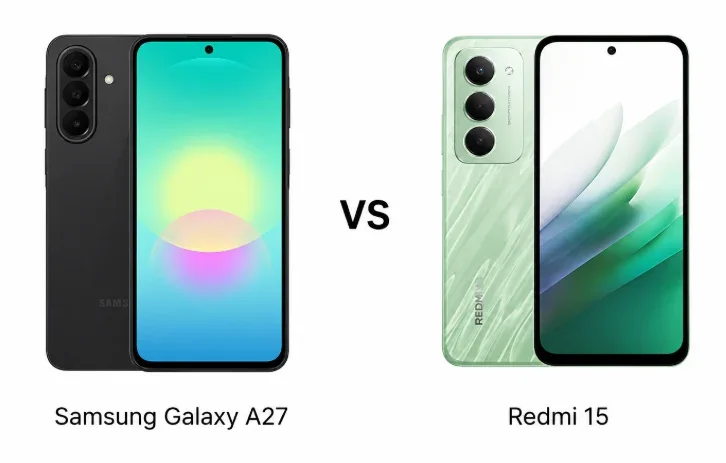
Choosing between the Samsung Galaxy A27 and Redmi 15 is not as simple as comparing specifications. Both devices target budget-conscious buyers, but they focus on different priorities.
Samsung aims to deliver a more premium experience with long-term software support, while Redmi focuses on battery life and affordability.
Design and Display
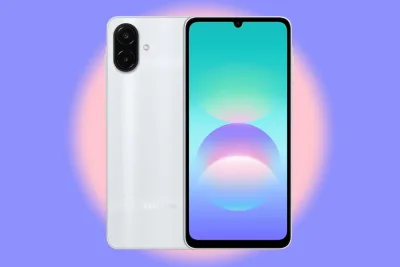
The Samsung Galaxy A27 feels noticeably more premium thanks to its Gorilla Glass Victus+ protection on both the front and back.
The overall construction gives it a more refined look, and the inclusion of eSIM support adds extra flexibility for modern users.
Samsung also brings DeX support, which is uncommon in this price segment and adds productivity value.
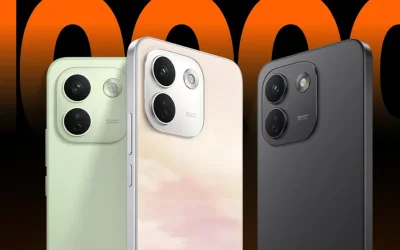
The Redmi 15 uses a plastic back and frame with Gorilla Glass 3 on the front.
While the IP64 rating matches Samsung's splash resistance, the overall build feels more focused on practicality than premium appeal.
The device is designed for users who prioritize durability and battery capacity over aesthetics.
Samsung's 6.7-inch Super AMOLED panel delivers deeper blacks, richer colors, and better contrast. The 120Hz refresh rate keeps animations smooth while maintaining excellent image quality.
The display feels more vibrant for streaming, gaming, and everyday use.
Redmi counters with a larger 6.9-inch IPS LCD and a faster 144Hz refresh rate.
The higher refresh rate helps scrolling feel exceptionally fluid, but the LCD panel cannot match AMOLED's color depth and contrast.
The Galaxy A27 wins this section.
Redmi offers a bigger and smoother display on paper, but Samsung's AMOLED panel, stronger materials, and premium features create a more polished daily experience.
Performance and Battery
The Galaxy A27 is powered by the Snapdragon 6 Gen 3 built on a more efficient 4nm process.
Combined with the Adreno 710 GPU, it delivers stronger overall performance for multitasking, gaming, and long-term use.
Samsung also promises up to six major Android upgrades, making the device a safer long-term investment.
The Redmi 15 uses the Snapdragon 6s Gen 3, which is capable for everyday tasks but sits a tier below Samsung's chipset.
Basic gaming, social media, and video streaming run smoothly, but demanding workloads reveal the performance gap.