Artificial intelligence on smartphones is entering a new phase.
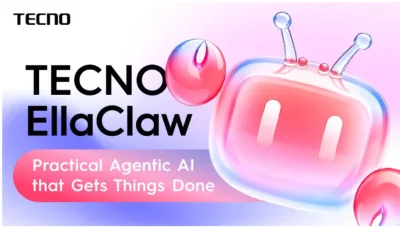
According to Counterpoint Research, the industry is moving beyond AI assistants that simply answer questions and toward 'Agent Phones' that can understand a user's intent and complete tasks automatically.
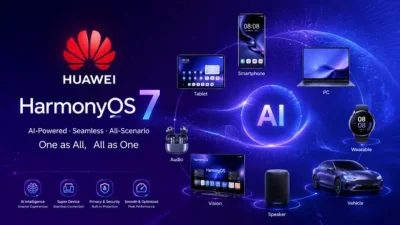
Instead of opening apps one by one, future smartphones are expected to coordinate multiple apps and services in the background, making everyday tasks faster and easier.
This shift could redefine how people interact with their devices and how smartphone brands compete in the years ahead.
From AI Assistants to AI Agents
Today's AI assistants are mainly designed to respond to questions, generate text, or provide recommendations. Counterpoint believes the next step is far more practical.
Agent Phones are designed to understand what users want to achieve and then carry out the necessary actions automatically.
Rather than asking users to switch between several apps, these AI agents can manage complete workflows on their behalf.
This changes the smartphone from a device that launches apps into an intelligent operating system layer that coordinates apps and services behind the scenes.
As a result, future competition may depend less on hardware specifications and more on how reliably AI can complete real-world tasks.
Open Frameworks Accelerate the Shift
One of the biggest drivers behind this transition is the emergence of open 'Claw' frameworks.
These frameworks provide a shared execution layer that allows AI agents to understand user intent, execute multi-step tasks, and work across different applications.
Counterpoint highlights OpenClaw as a leading open-source framework in this space.
Because these frameworks are openly available, smartphone manufacturers no longer need to build complete AI agent systems from scratch.
This reduces development costs and engineering complexity, making advanced AI features more accessible across different smartphone price segments.
Agent-to-Agent Communication Improves Automation
Another important development is Agent-to-Agent (A2A) communication.
Instead of relying on a single AI assistant, multiple AI agents can communicate with one another, share information, delegate responsibilities, and coordinate workflows.
This approach helps remove traditional app boundaries, allowing different services to work together more smoothly.