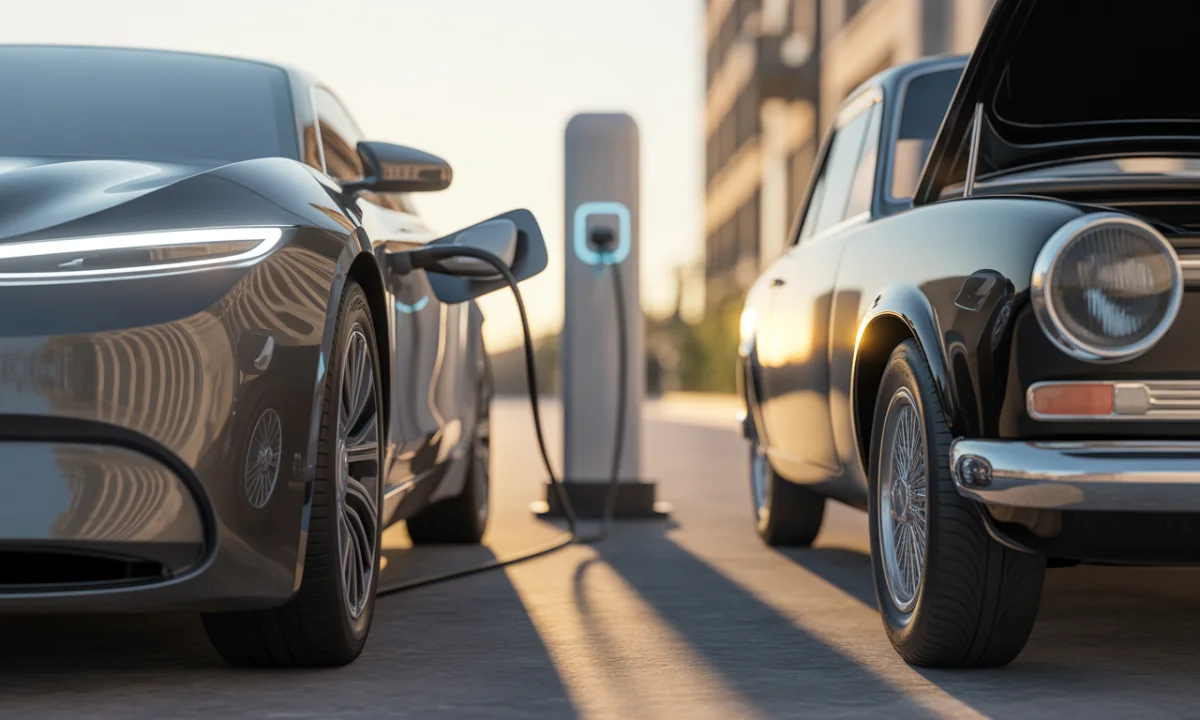
Choosing between an electric and a gasoline car involves trade-offs: instant torque and lower energy costs versus quick refueling and lower upfront prices.
The right choice depends on your home charging situation, driving habits, and budget.
What Changes When You Switch to Electric
Switching to an EV changes daily ownership. Overnight home charging replaces most fuel stops, making the car ready each morning.
If you have a driveway and can install a 240V charger, the convenience is transformative. Apartment dwellers or those relying on public chargers see fewer benefits.
Energy costs shift from the pump to your electricity bill. Your savings depend on utility rates, time-of-use plans, and when you charge.
Understanding local rates and rebates becomes important.
Maintenance moves from oil changes and belts to software updates and tire wear.
Regenerative braking reduces brake service, but instant torque and heavier curb weights can wear tires faster. Over-the-air updates can improve range or features without a shop visit.
Driving feel changes with instant torque and near-silent acceleration. Merging is smoother, cabins are quieter.
However, cold weather, towing, and long trips require planning. For many, that planning is a fair trade for daily comfort and lower running costs.
Core Advantages of Electric Cars
Daily benefits include quiet cabins, instant torque, and fewer maintenance visits. One-pedal driving with regenerative braking is preferred by many commuters.
Running costs are lower.
At 28 kWh/100 miles and $0.16/kWh, energy cost is about $0.045 per mile, compared to $0.118 per mile for a 32 mpg gasoline car at $3.80/gal.
Over 12,000 miles, that's $540 vs. $1,416 per year in fuel alone.
Home refueling means waking to a full battery, eliminating weather-exposed stops. Lower scheduled maintenance—no oil changes, no exhaust repairs—simplifies ownership.
Software updates keep older vehicles feeling current.
Zero tailpipe emissions improve local air quality, especially in dense areas. Lifecycle emissions depend on the grid mix, but cleaner grids increasingly favor EVs.
Key Trade-Offs and Charging Reality
Home Level 2 charging is critical. Without it, EV benefits shrink.