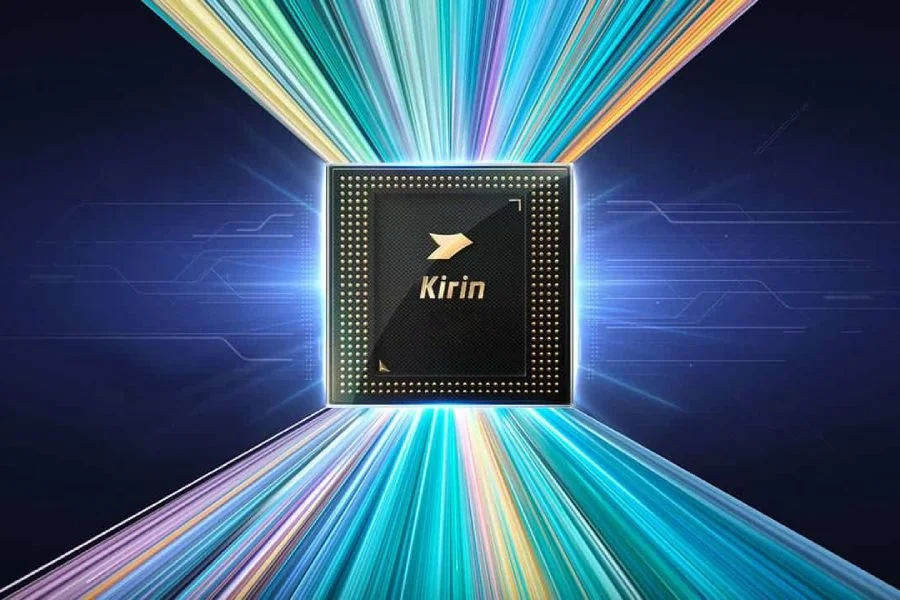
Huawei has offered a first look at its next-generation Kirin mobile processor, tentatively called the Kirin 2026, at the International Circuits and Systems Symposium (ISCAS 2026).
The chip is the first major product built around Huawei's new "Tau (τ) Law" semiconductor strategy, which focuses on reducing signal delay rather than simply shrinking transistors.
Key specifications and technology
According to Huawei, the Kirin 2026 uses "logic folding" technology to increase transistor count by 53.5%, reaching approximately 238 million transistors per square millimeter (MTR/mm²).
The chip also delivers a 41% improvement in high-performance core efficiency and boosts peak clock speeds by 12.7% to around 3.1GHz.
Instead of relying solely on advanced manufacturing nodes, Huawei employs a "free logic design" that expands chip structures from a single layer to a double-layer design.
This approach improves transistor density and reduces signal travel time inside the processor.
He Tingbo, Director of Huawei and President of its Semiconductor Business Unit, revealed the technical details at ISCAS 2026.
She noted that after the launch of the Kirin 9030 Pro last year, Huawei's mobile processors entered a "performance saturation zone."
Traditional improvements were no longer delivering the same gains, prompting Huawei to develop a new path centered on "time scaling" rather than purely geometric scaling.
Huawei believes this strategy can sustain chip improvements over the next several years.
The company projects steady increases in frequency and transistor density through the decade, followed by a "revolutionary doubling upgrade" in 2031.
At that point, Huawei expects future processors to exceed 400 MTR/mm² and potentially reach clock speeds of 5.0GHz.
Many of the technologies introduced at ISCAS 2026 will gradually appear in commercial products starting in 2027 and beyond, Huawei added.