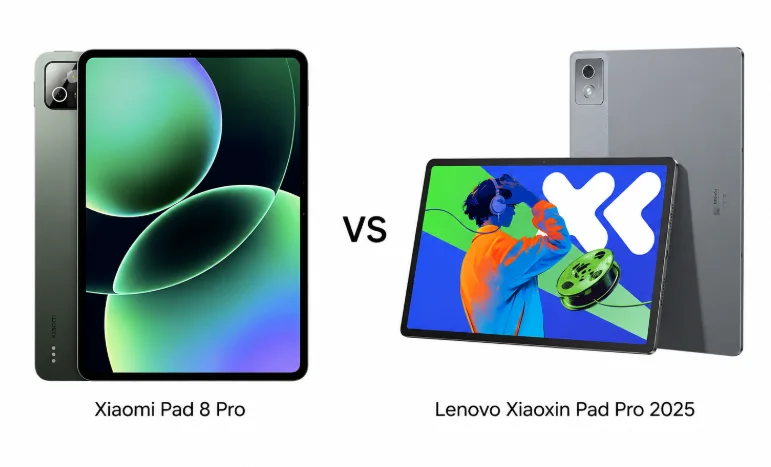
Choosing between the Xiaomi Pad 8 Pro and the Lenovo Xiaoxin Pad Pro 2025 is not straightforward.
One focuses on flagship performance and premium hardware, while the other prioritizes a larger display, productivity features, and aggressive pricing.
>>> Asus Zenbook S14 (UX5406AA) Review: Premium Ultrabook with All-Day Battery
Design and Display
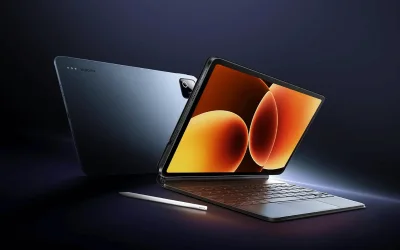
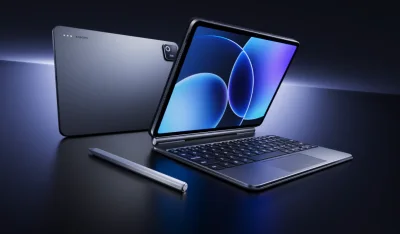
The Xiaomi Pad 8 Pro features a slim 5.8mm aluminum unibody and weighs around 485g, making it more portable.
It supports a magnetic stylus and has a clean flagship aesthetic.
The Lenovo Xiaoxin Pad Pro 12.7 2025 is larger, built for productivity. It includes a side-mounted fingerprint scanner and POGO pins for accessories.
Xiaomi offers an 11.2-inch 3.2K IPS panel with Dolby Vision, HDR Vivid, 800 nits peak brightness, and a 144Hz refresh rate.
Lenovo counters with a 12.7-inch 2.9K LCD, also 144Hz, with HDR10+ and Dolby Vision. The larger screen benefits multitasking and media consumption.
Performance and Software
The Snapdragon 8 Elite in the Xiaomi Pad 8 Pro delivers flagship-level CPU and GPU performance.
With up to 16GB RAM and UFS 4.1 storage, it handles demanding gaming and video editing.
>>> iPhone 18 Pro dummy units show four color options, including Dark Cherry
The Lenovo tablet uses the MediaTek Dimensity 8300, a strong upper-midrange chip.
Daily tasks and casual gaming run smoothly, but it cannot match the raw power of Xiaomi's offering.
Lenovo's larger display aids split-screen work and multitasking. MicroSD expansion adds flexibility.
Xiaomi runs Android 16-based HyperOS 3, with faster storage and performance that should age better.
Battery and Accessories
Xiaomi packs a 9200mAh battery with 67W fast charging and reverse wired charging. Lenovo has a larger 10200mAh battery for longer screen-on time, though charging is slower.
Both support stylus and keyboard accessories. Xiaomi benefits from HyperOS ecosystem integration.
Lenovo's POGO pins and expandable storage suit productivity setups.
Cameras and Media
Xiaomi offers a 50MP rear camera and a 32MP ultrawide front camera, better for video calls and document capture.
>>> Xiaomi HyperOS 4 (Android 17) Update: Full List of Eligible Devices
Lenovo has a 13MP rear and 8MP front camera, adequate for basics.
Xiaomi supports 4K 60fps recording and Dolby Atmos audio. Lenovo features a four-speaker JBL system with Dolby Atmos, excellent for movies and music.
Pricing
The Xiaomi Pad 8 Pro is expected around $500 (approx. ₹47,000).
The Lenovo Xiaoxin Pad Pro 12.7 2025 targets a lower price bracket while offering a large display, solid performance, expandable storage, JBL speakers, and a larger battery.
Conclusion
The Xiaomi Pad 8 Pro is the better tablet overall with its flagship chipset, superior cameras, faster charging, and newer software.
It is a stronger long-term investment for power users and gamers.
The Lenovo Xiaoxin Pad Pro 12.7 2025 is the smarter choice for buyers prioritizing screen size, battery life, productivity, and value.
>>> Lenovo Launches Lecoo Air 14, Intel's First Project Firefly Laptop
For entertainment and everyday work, it delivers an impressive experience at a more accessible price.