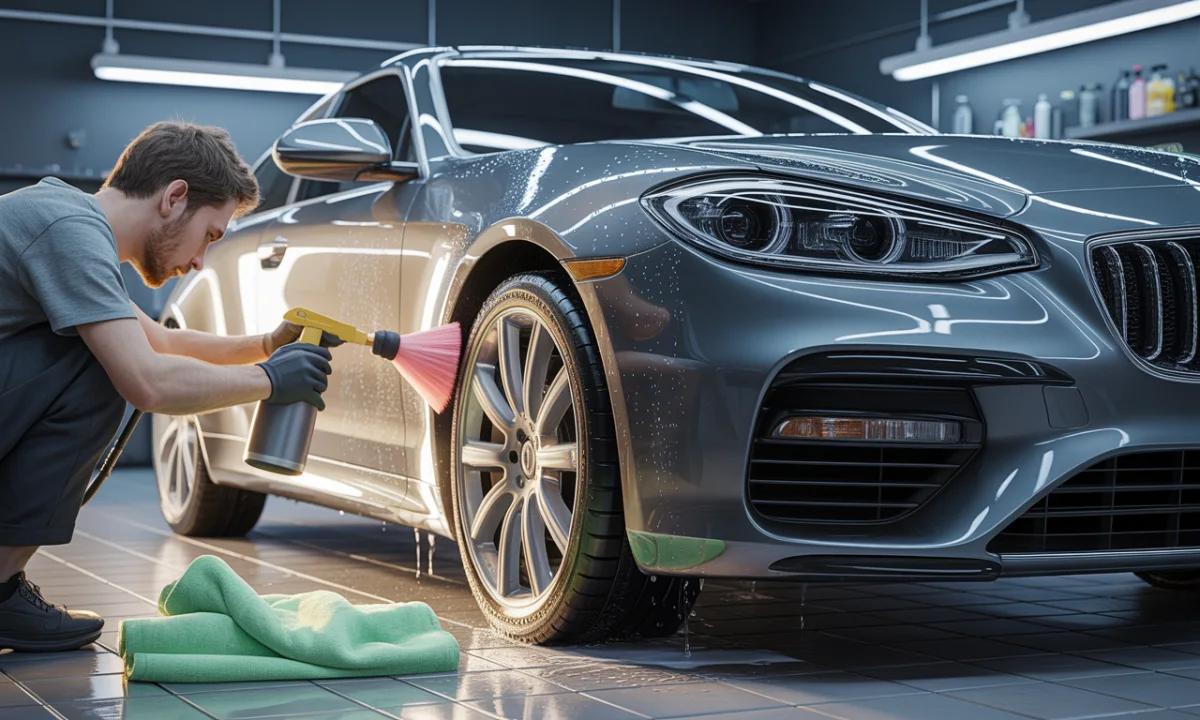
Professional car detailing is not about expensive products or hours of labor—it's about using the right techniques and tools.
Whether you're preparing for a car show or simply want to protect your vehicle's value, following a pro's approach can make a significant difference.
Choose the Right Cleaning Chemistry
Many DIYers reach for dishwashing liquid because it's convenient, but this is a mistake.
Dish soap strips protective oils from paint and clearcoat, shortening the life of your finish.
Professional detailers use pH-balanced car wash soap that preserves wax and sealant layers. These shampoos provide lubrication so dirt slides off without scratching.
Always follow dilution guidelines—more concentrate is not better. Using the wrong cleaner can cause long-term damage that no quick fix can reverse.
Use the Proper Wash Tools
Traditional sponges have large pores that trap grit, turning every wipe into a potential scratch. Instead, use a microfiber wash mitt that releases dirt when rinsed.
Pair the mitt with a grit guard in your wash bucket to keep particles settled at the bottom.
For drying, avoid chamois and use high-quality microfiber towels that pick up and hold contaminants.
Refold towels frequently to expose a clean surface, and use separate towels for drying and wax removal.
Master the Two-Bucket Method
This simple system prevents scratches by keeping your wash water clean. Fill one bucket with soapy water and another with clean rinse water.
After washing each panel, dunk the mitt in the rinse bucket to release grit before returning to the soapy bucket.
Change rinse water when it becomes dirty, and use a grit guard in both buckets for best results.
Start washing from the top of the vehicle and work downward to avoid dragging dirt over clean areas.
Polish and Protect the Paint Correctly
Polishing removes microscopic defects to restore clarity, while waxing adds protection and shine.
Always correct scratches first using a scratch removal kit, then polish, then apply a protective layer.
Use a dual-action polisher, not a high-speed rotary buffer. Dual-action polishers oscillate and rotate at lower speeds, reducing heat and the risk of burn-through.
Modern synthetic waxes and paint sealants outperform old paste waxes in durability and gloss.
Apply sparingly with a foam applicator and buff off haze with a clean microfiber towel.
Detail the Interior Like a Pro
Interior detailing is about removing contaminants, not just wiping surfaces. Use a small detail brush and a shop vacuum together to clean dust from crevices.
For carpets and floor mats, agitate fibers with a stiff brush while vacuuming to lift embedded dirt. This mechanical action makes vacuuming far more effective.
Avoid silicone-based sprays on dashboards—they attract dust and create glare. Use non-silicone matte protectants instead.
Clean glass last to remove any overspray from protectants and ensure streak-free windows.
After cleaning, re-lubricate door seals with a silicone-based lubricant to prevent sticking in extreme weather.