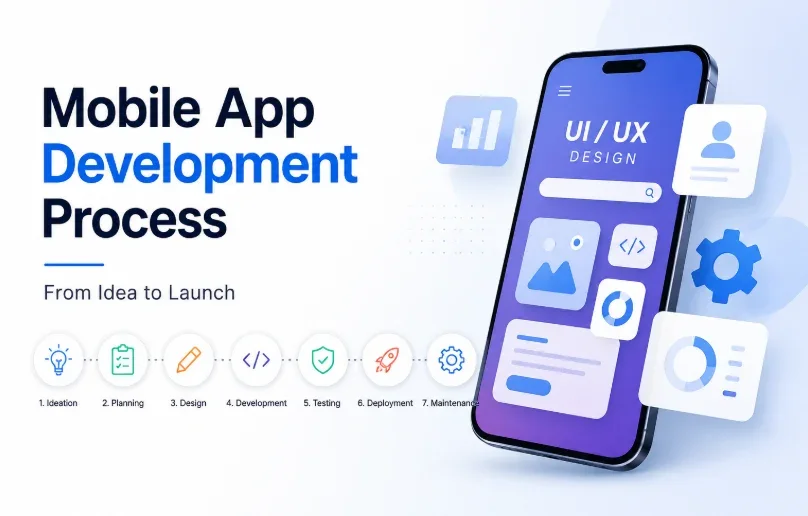
Mobile applications have become a cornerstone of modern business strategy, enabling companies to connect with customers, streamline operations, and generate new revenue streams.
However, building a successful app requires more than just coding skills. Industry experts stress that a well-defined development process is critical to meeting user expectations and business objectives.
From initial concept to ongoing updates, each phase contributes to the app's overall success.
Ideation and Market Research
Every app starts with an idea. The first step involves identifying a problem and determining how the app can deliver value.
Businesses must define their target audience, understand user behavior, and establish a unique value proposition (UVP).
Market research plays a key role. Companies analyze competitors, evaluate trends, and spot gaps their app can fill.
Product discovery and concept validation often occur before major investments are made.
With 71% of consumers expecting personalized experiences and 76% frustrated when personalization is absent, these insights heavily influence feature selection and overall app design.
Planning the Development Strategy
Once the concept is validated, teams move to planning. Requirements are documented, timelines set, and milestones defined.
Many organizations consult experienced development partners to understand technology choices, scalability, and long-term goals.
A crucial decision is the development approach. Native development remains popular for maximum performance and device integration.
iOS apps typically use Swift, while Android apps rely on Kotlin.
Cross-platform frameworks like React Native allow a single codebase for multiple platforms, cutting time and costs.
Some opt for Progressive Web Apps (PWAs), which blend web and mobile experiences without app store installation.
During planning, teams also evaluate technology stacks, security needs, budget, and maintenance expectations.
Design and Prototyping
Good design boosts engagement and retention. Teams create wireframes, user flows, interactive prototypes, and interface layouts to visualize the app before coding begins.
Prototyping lets stakeholders test navigation and interactions early, reducing costly changes later. Accessibility is also a priority, with many teams following WCAG guidelines to ensure inclusivity.
Development
After design approval, developers start building.