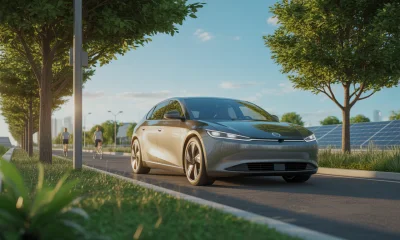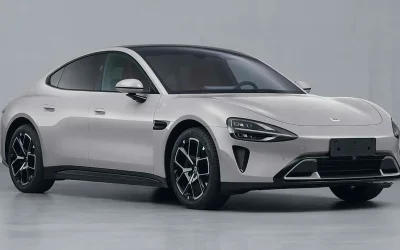
Replacing a relatively new gasoline vehicle with an electric vehicle can lower cumulative greenhouse gas emissions, but it is not a universal rule for every driver or every vehicle.
A study summarized by SingularityHub found that, in a baseline US scenario, retiring a gasoline SUV after two years and replacing it with a battery-electric vehicle cut cumulative emissions by 44% over a 16-year period.
Why an early EV replacement can reduce cumulative emissions
Researchers modeled the early replacement of operating gasoline vehicles at different ages.
Their analysis covered more than 400 internal-combustion and battery-electric models, varying vehicle efficiency, annual mileage, manufacturing emissions, battery size and the emissions intensity of the electricity used for charging.
For the representative SUV sold on the average US grid, the additional emissions associated with making the replacement EV were offset after about three years of driving.
The remaining years of lower operating emissions then produced the 44% cumulative reduction reported for that baseline case.
The findings do not mean that an EV has no manufacturing or charging emissions.
Instead, they show why the comparison depends on future use.
A gasoline vehicle that remains in service continues to consume fuel, while the replacement EV brings both an upfront manufacturing impact and an electricity-related operating impact.
Mileage, efficiency and the local grid change the result
Across the modeled scenarios, early replacement produced lower greenhouse gas emissions in 92% of cases.
That broad result still includes important exceptions.
The climate advantage can disappear when an EV uses more than 30 kWh per 100 kilometers and is charged from a grid emitting more than 500 kilograms of CO2 per MWh.
Annual driving distance also matters because an EV needs enough use to offset its manufacturing emissions.
The reported thresholds were 7,054 kilometers per year for cars, 6,837 kilometers for SUVs and 10,794 kilometers for pickups.
A lightly driven vehicle may therefore present a different lifecycle calculation from a high-mileage SUV or truck.
Plug-in hybrids are another case where replacement is not automatically favorable.