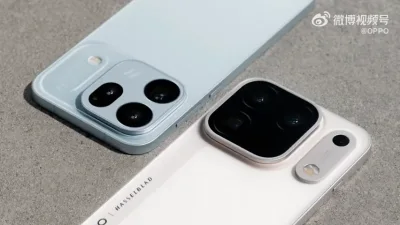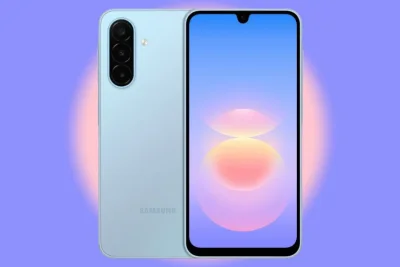
Samsung is reportedly expanding a specialized lens manufacturing technique across the Galaxy S27 Ultra's camera system.
The inkjet lens printing process, first introduced on the Galaxy S26 Ultra, will now be applied to all three rear camera modules on the upcoming flagship.
According to industry sources, Samsung Electronics and Samsung Electro-Mechanics are rolling out the process more widely.
Instead of traditional anti-reflective films, a precise application of matte ink is used to reduce flare and ghosting while taking up less space inside the lens stack.
Selective Application for Balance
The inkjet treatment will be applied to specific lens layers: L3 Tele, L3 Wide, and L6 Wide.
Each module will have only one lens layer with the ink, while the rest continue using conventional film.
This selective approach helps balance optics, manufacturing yields, cost, and reliability.
The refinement comes alongside a major camera redesign.
The S27 Ultra is expected to feature a triple rear camera setup: a 200MP main sensor, a 50MP ultrawide, and a 50MP 5x periscope telephoto, dropping the 3x telephoto.
The Galaxy S27 Pro is said to share the same main and ultrawide sensors but pair them with a 12MP 3x telephoto.
Both models are also reported to get a 16MP front camera.
By freeing up a few micrometers inside each module, the inkjet process gives engineers more breathing room.
That extra space could be used for better optical image stabilization or keeping the camera bump under control.